

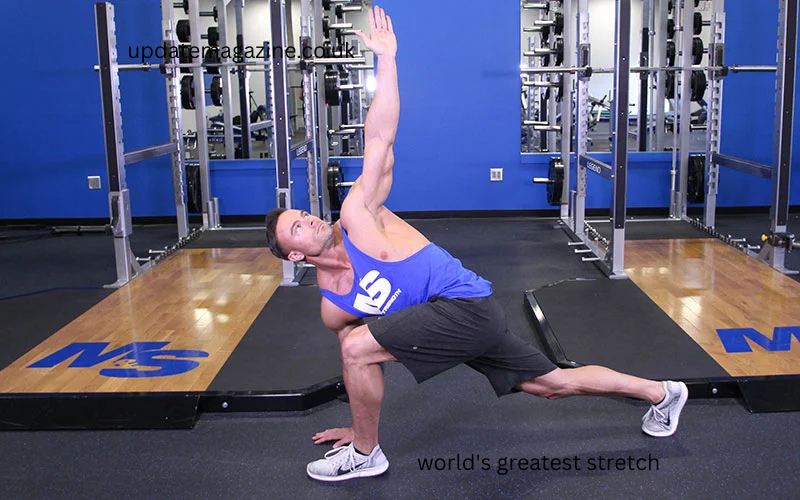
If you’ve ever searched for a single stretch that improves flexibility, mobility, posture, and athletic performance all at once, you’ve probably come across the world’s greatest stretch. It’s one of the most popular movement drills in fitness, sports training, physical therapy, and warm-up routines—and for good reason. The world’s greatest stretch isn’t just a static stretch you hold for a long time. It’s a dynamic movement that targets multiple muscle groups at the same time while improving your body’s ability to move well.
The name might sound like marketing, but the stretch has earned its reputation because it addresses some of the most common tight areas in the modern body: hip flexors, hamstrings, glutes, thoracic spine, calves, and even the shoulders. It also helps activate the core, improve coordination, and prepare your body for strength training, running, sports, or even a long day of sitting.
In this guide, you’ll learn exactly what the world’s greatest stretch is, why it’s so effective, how to do it correctly, and how to adjust it for your fitness level. Whether you’re an athlete, beginner, desk worker, or someone recovering from stiffness, this article will help you use the stretch safely and consistently.
What Is the World’s Greatest Stretch?
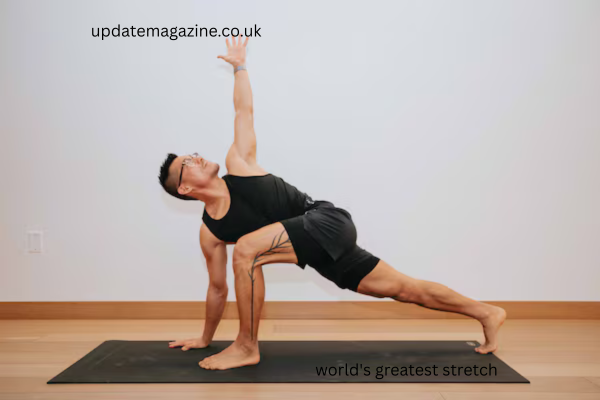
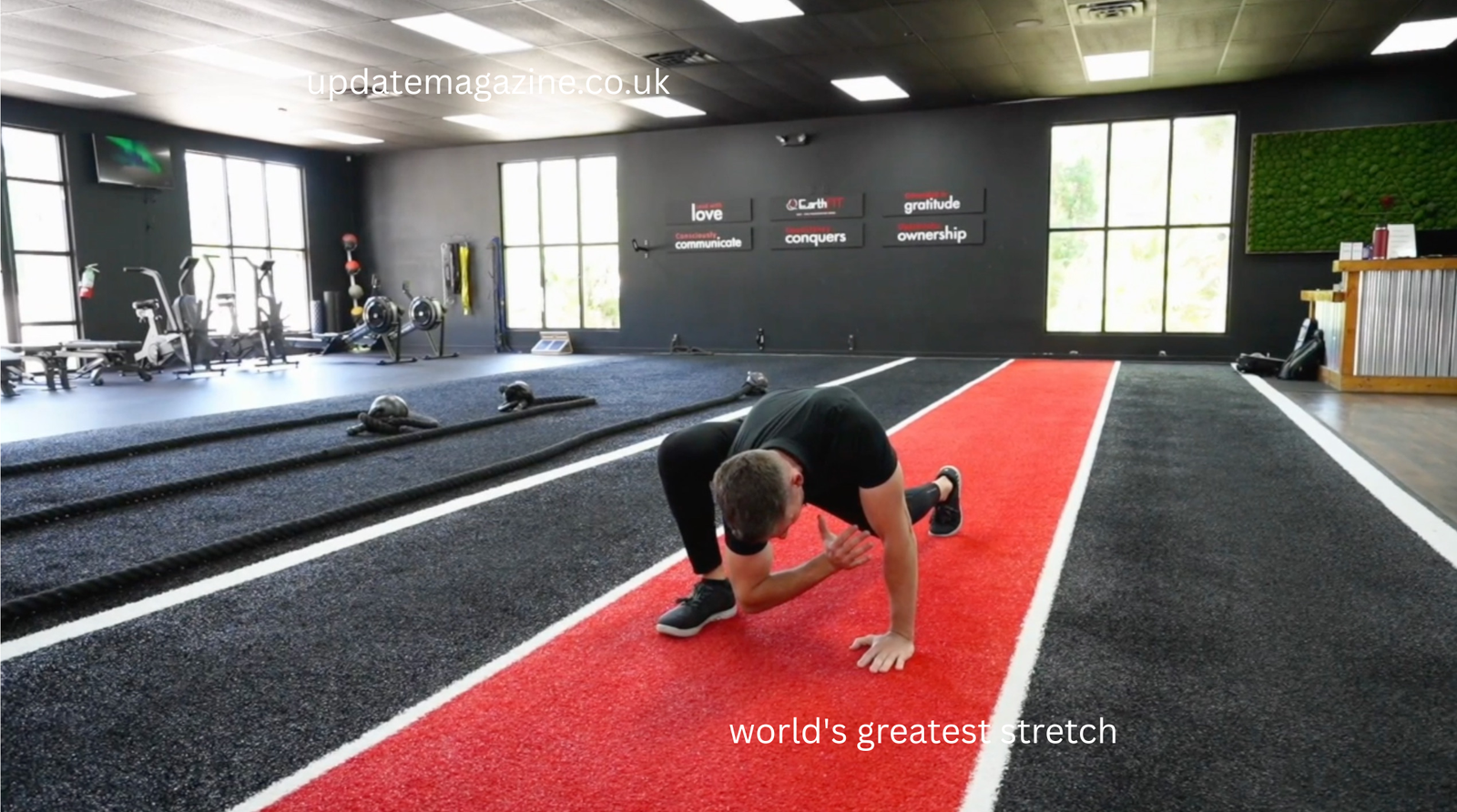
The world’s greatest stretch is a dynamic mobility exercise that combines a deep lunge, hip opening, thoracic rotation, and hamstring stretch into one flowing movement. It’s commonly used in warm-ups because it improves range of motion while also activating the muscles needed for athletic movement.
Unlike many basic stretches that target only one area, the world’s greatest stretch works as a full-body mobility drill. It teaches the body to move through multiple joints at once—exactly how real movement happens in sports and daily life.
Most versions of the stretch include:
- A long lunge position
- Elbow-to-instep reach (or forearm drop)
- A rotation toward the front leg
- A hamstring stretch step
This combination makes it extremely efficient.
Why the World’s Greatest Stretch Is So Popular
The world’s greatest stretch has become a staple because it fits almost any goal. It’s used by:
- Weightlifters
- Runners
- Soccer players
- Martial artists
- CrossFit athletes
- Physical therapists
- Yoga practitioners
- People with tight hips from sitting
Its popularity comes from the fact that it’s both simple and powerful. You don’t need equipment, you don’t need a gym, and you don’t need advanced flexibility to start.
Even 3–5 minutes of the world’s greatest stretch can make your body feel looser, more upright, and more prepared for movement.
Key Benefits of the World’s Greatest Stretch
The world’s greatest stretch provides a wide range of physical benefits. The biggest ones include:
Improved Hip Mobility
Modern life tightens the hips due to sitting. This stretch opens hip flexors and improves hip rotation.
Better Thoracic Spine Rotation
Many people are stiff in the upper back. The rotation portion improves thoracic mobility, which supports better posture and shoulder function.
Increased Hamstring Flexibility
The hamstring stretch step helps lengthen the back of the leg, reducing stiffness and improving movement.
Better Ankle and Calf Mobility
The lunge position and movement can improve ankle dorsiflexion over time.
Enhanced Athletic Performance
Better mobility often means better mechanics in squats, running, lunges, and jumping.
Reduced Risk of Injury
When joints move better and muscles are prepared, your risk of strain decreases.
Full-Body Warm-Up in One Drill
Instead of doing 10 separate stretches, you can do one drill that covers multiple areas.
Muscles and Joints Targeted by the World’s Greatest Stretch
One reason the world’s greatest stretch is so effective is that it targets several key areas at once:
- Hip flexors (especially the rear leg)
- Glutes and hip rotators
- Hamstrings
- Calves and ankles
- Thoracic spine (upper back)
- Core muscles (stabilization)
- Shoulders and chest (indirectly through rotation)
This makes it an ideal “reset” movement for tight bodies.
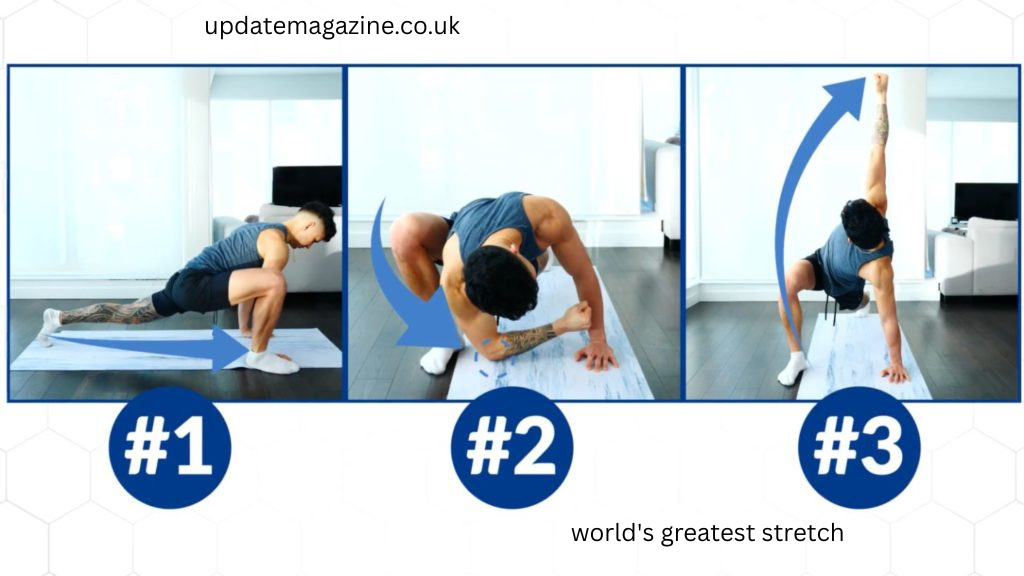
How to Do the World’s Greatest Stretch (Step-by-Step)
Here is the most common and widely taught version of the world’s greatest stretch. Follow these steps slowly and with control.
Step 1: Start in a Push-Up Position
Begin in a high plank position with hands under shoulders and legs extended.
Step 2: Step One Foot Outside Your Hand
Bring your right foot forward and place it outside your right hand. Your right knee should be bent, and your left leg stays extended behind you.
Step 3: Drop Your Hips Gently
Sink your hips slightly to feel a stretch in the left hip flexor (rear leg).
Step 4: Elbow-to-Instep (Optional Version)
Lower your right elbow toward the inside of your right foot. If you can’t reach, use your hands or blocks (or stay high).
Step 5: Rotate Your Upper Body
Place your right hand on the ground, then rotate your torso and reach your right arm toward the ceiling. Follow your hand with your eyes.
Step 6: Return to the Ground
Bring your hand back down.
Step 7: Hamstring Stretch Step
Shift your hips back, straighten your right leg, and pull your toes upward. This gives a hamstring stretch.
Step 8: Repeat on the Other Side
Return to plank and switch legs.
This is one full rep per side.
Common Mistakes in the World’s Greatest Stretch
The world’s greatest stretch is safe for most people, but poor form can reduce benefits or create discomfort. Here are the most common mistakes:
1. Rushing the Movement
Speed reduces mobility gains. Move slowly and breathe.
2. Collapsing the Lower Back
In the lunge position, avoid dumping into the lumbar spine. Keep your core engaged.
3. Letting the Front Knee Cave In
Your knee should track in line with your toes, not collapsing inward.
4. Twisting the Wrong Way
Rotate from the upper back, not from the lower spine.
5. Forcing the Elbow Drop
If you can’t reach the elbow-to-instep comfortably, don’t force it.
The world’s greatest stretch should feel like a deep stretch—not sharp pain.
World’s Greatest Stretch for Beginners
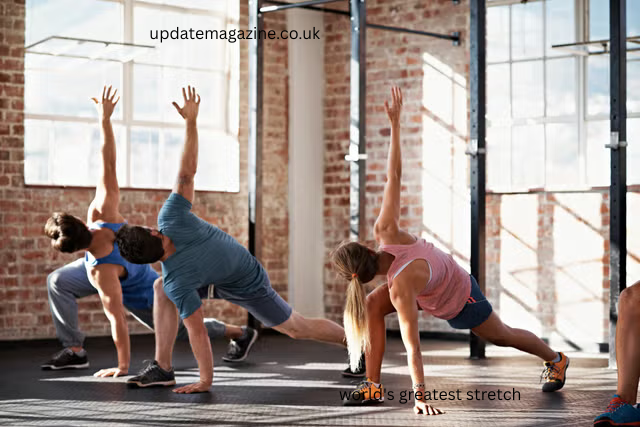
If the full version feels too intense, you can modify the world’s greatest stretch easily.
Beginner-friendly adjustments include:
- Keep both hands on the floor instead of dropping the elbow
- Use a yoga block or chair under your hands
- Perform the lunge on your knees (rear knee down)
- Reduce the depth of the lunge
- Do smaller rotations
A beginner version can still deliver excellent results if done consistently.
World’s Greatest Stretch for Athletes
Athletes love the world’s greatest stretch because it improves mobility in positions used in sports: sprinting, lunging, changing direction, and rotating.
Athletic upgrades include:
- Add a deep hip flexor pulse
- Hold the rotation for 2–3 seconds
- Add a “reach forward” after rotation
- Add a calf stretch by pressing the back heel
- Add a push-up between reps for activation
This makes it a powerful pre-training warm-up.
World’s Greatest Stretch for Runners
Runners tend to develop tight hips, hamstrings, and calves. The world’s greatest stretch targets all of them, making it ideal before or after runs.
For runners, the most important parts are:
- Hip flexor opening (rear leg)
- Hamstring straightening (front leg)
- Thoracic rotation (helps arm swing and posture)
A good runner routine is 2–3 reps per side before running and 1–2 reps per side after.
World’s Greatest Stretch for Desk Workers and Posture
If you sit for hours, your body typically becomes stiff in these areas:
- Hip flexors
- Hamstrings
- Upper back
- Neck and shoulders
The world’s greatest stretch can counteract the “desk posture” pattern by opening the hips and encouraging spinal rotation.
Doing this stretch once per day—even for 2–4 minutes—can help you feel more upright and less tight.
How Long Should You Hold the World’s Greatest Stretch?
Because it’s a dynamic mobility drill, you don’t need to hold it for a long time like a static stretch.
Recommended timing:
- Warm-up: 1–2 seconds per position, flowing smoothly
- Mobility work: hold rotation and hamstring step for 3–5 seconds
- Post-workout cooldown: slow down and hold each position for 5–10 seconds
In most cases, 2–4 reps per side is enough.
How Many Reps of the World’s Greatest Stretch Should You Do?
Here are practical guidelines:
Beginners
- 1–2 reps per side
- 1 set total
General Fitness
- 2–3 reps per side
- 1–2 sets
Athletes
- 3–5 reps per side
- 1–2 sets as part of warm-up
More isn’t always better. Quality matters more than volume.
When to Do the World’s Greatest Stretch
The world’s greatest stretch fits into many parts of your day:
Before Workouts
Perfect for warm-ups, especially before lower-body training.
After Workouts
Great as a cooldown mobility flow.
Morning Routine
Helps wake up the body and reduce stiffness.
After Long Sitting
Excellent for desk breaks.
Before Sports
Useful for improving movement quality.
It’s one of the few stretches that truly works anytime.
World’s Greatest Stretch Variations You Can Try
The world’s greatest stretch has multiple versions. Here are popular variations:
1. Rear Knee Down Variation
This reduces intensity and helps focus on hip flexors.
2. With a Deep Lunge Hold
Hold the lunge for 10–15 seconds before rotating.
3. With a Push-Up
Add a push-up after stepping into plank for strength and stability.
4. With a T-Spine Reach Through
Instead of reaching upward, reach under your body to increase rotation.
5. With a Standing Start
Some people prefer stepping into the lunge from standing rather than plank.
All variations keep the core benefit: hips + hamstrings + rotation.
World’s Greatest Stretch vs Other Mobility Exercises
Many people ask how the world’s greatest stretch compares to other popular stretches.
Compared to a Basic Hip Flexor Stretch
The world’s greatest stretch includes hip flexor stretching but adds rotation and hamstrings.
Compared to Downward Dog
Downward dog targets hamstrings and shoulders, but not the deep hip opening and rotation.
Compared to Lunges
Standard lunges strengthen but don’t mobilize the spine as effectively.
Compared to Yoga Flows
Yoga flows can be broader, but the world’s greatest stretch is more targeted and efficient.
That’s why it’s often considered a “one-stop” mobility drill.
Is the World’s Greatest Stretch Safe for Everyone?
The world’s greatest stretch is generally safe, but some people should be cautious:
- People with serious lower back pain
- People with knee injuries
- People with hip impingement
- People recovering from surgery
- People with balance limitations
If you feel sharp pain, stop and use a gentler version.
A good rule: stretch sensation is okay; joint pain is not.
How to Make the World’s Greatest Stretch More Effective
If you want better results from the world’s greatest stretch, focus on these tips:
Breathe Slowly
Exhale during the rotation. Breathing improves mobility.
Move With Control
Don’t bounce. Smooth motion helps the nervous system relax.
Keep Your Core Engaged
A stable core protects the lower back.
Rotate From the Upper Back
Think “ribcage rotation,” not “low back twist.”
Be Consistent
Mobility improves through frequency. Even 3–4 days per week helps.
A Simple Daily Routine Using the World’s Greatest Stretch
If you want a simple daily mobility routine, try this:
- World’s greatest stretch – 2 reps per side
- Glute bridge – 10 reps
- Cat-cow – 8 reps
- Shoulder circles – 10 reps
This takes 5–7 minutes and helps most people feel dramatically better.
Frequently Asked Questions About the World’s Greatest Stretch
Is the world’s greatest stretch good for flexibility?
Yes. It improves flexibility in hips, hamstrings, calves, and upper back.
Can I do the world’s greatest stretch every day?
Yes, most people can safely do it daily, especially at low volume.
Is it better before or after workouts?
It’s excellent before workouts as a warm-up, and also useful after as a cooldown.
Does the world’s greatest stretch help lower back pain?
It can help if tight hips are contributing to back discomfort, but it should not cause pain. Modify if needed.
How long does it take to see results?
Many people feel immediate improvement. Long-term mobility gains usually show within 2–4 weeks of consistency.
Conclusion: Why the World’s Greatest Stretch Deserves Its Name
The world’s greatest stretch is one of the most valuable mobility drills you can learn because it combines multiple essential movement benefits into one exercise. It opens tight hips, improves hamstring flexibility, increases upper back rotation, and prepares the body for athletic performance. Whether you’re training in the gym, running, playing sports, or simply trying to feel less stiff from sitting all day, this stretch is a reliable tool.
What makes it truly powerful is its efficiency. Instead of spending 20 minutes doing separate stretches, you can do a few reps of the world’s greatest stretch and target the most common tight areas in one flow. It’s easy to modify, safe for most people, and effective for beginners and advanced athletes alike.
If you want to improve mobility, reduce stiffness, and move better every day, the world’s greatest stretch is a perfect place to start.