

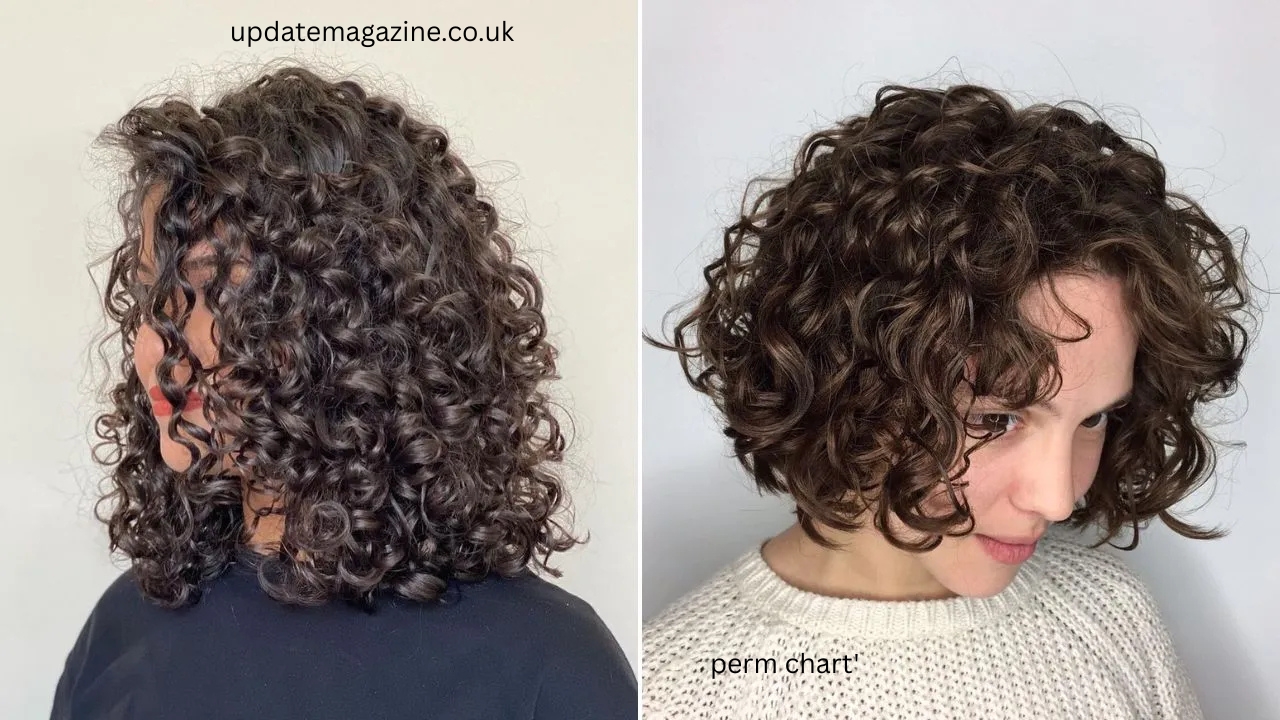
A perm chart is one of the most useful visual tools in the world of hairstyling and hair transformation. Whether someone is considering getting a perm for the first time or is a professional stylist looking to refine technique selection, a perm chart’ provides clarity, structure, and guidance. The perm chart helps categorize curl types, rod sizes, chemical strengths, hair lengths, and expected results, making it easier to predict outcomes and achieve consistent styling results.
In this comprehensive guide, we will explore what a perm chart is, how it works, different types of perm charts, how professionals use them, and how individuals can benefit from understanding a perm chart before booking a salon appointment. By the end, you will have a deep understanding of how a perm chart supports better decision-making and more satisfying hair results.
Perm Chart Definition and Purpose
A perm chart is a structured visual or tabular reference used in the hairstyling industry to map out perm types, rod sizes, curl patterns, hair textures, and chemical processing times. The main purpose of a perm chart is to help stylists determine the appropriate combination of tools and techniques needed to achieve a specific curl result.
Perming involves chemically restructuring the hair’s bonds to create waves or curls. Because every hair type responds differently to chemical treatment, a perm chart acts as a guide to avoid guesswork. It reduces the risk of overprocessing, uneven curls, or unexpected texture changes.
For clients, a perm chart offers realistic expectations. It visually demonstrates how different rod sizes and wrapping methods impact the final outcome.
Perm Chart and Curl Pattern Categories
One of the most important components of a perm chart is the curl pattern classification. Curl patterns generally range from loose waves to tight coils.
A typical perm chart may include categories such as:
• Loose body wave
• Beach wave
• Spiral curl
• Tight ringlets
• Corkscrew curls
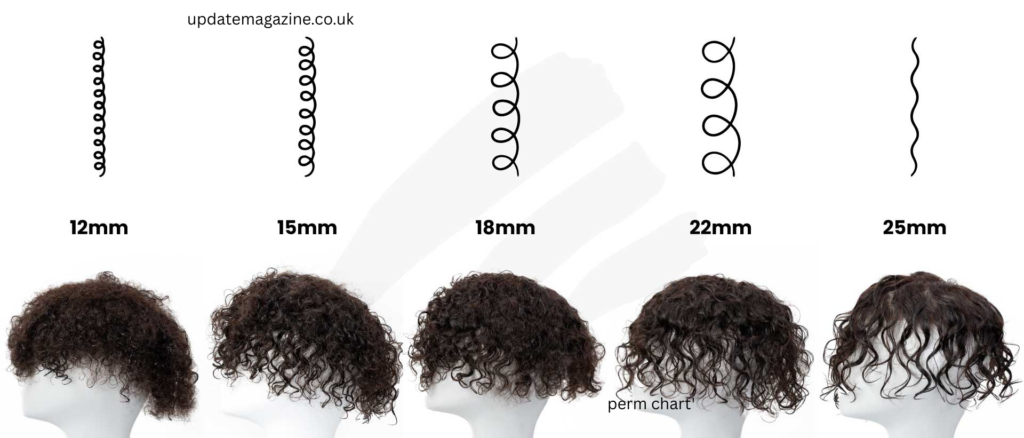
Each curl category corresponds to specific rod sizes and wrapping methods. Larger rods create softer waves, while smaller rods produce tighter curls.
Understanding the perm chart allows both stylists and clients to align expectations with achievable results.
Perm Chart Rod Size Guide
Rod size is one of the most influential factors in perm results. A perm chart typically includes a rod size guide, which indicates the diameter of rods and the type of curl they produce.
Large rods produce gentle waves and volume. Medium rods create balanced curls. Small rods result in tight, defined curls.
Rod sizes are usually measured in millimeters. A perm chart clearly outlines which rod size works best for certain hair lengths and textures. For example, long hair may require larger rods to prevent excessive tightness, while short hair may benefit from smaller rods for definition.
The rod size section of a perm chart ensures that stylists choose tools strategically rather than randomly.
Perm Chart Hair Length Considerations
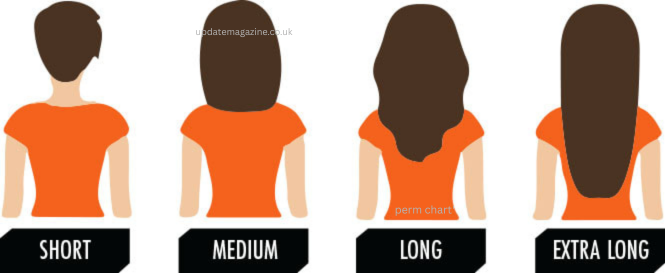
Hair length significantly affects perm outcomes. A perm chart often includes sections for short, medium, and long hair.
Short hair typically shows tighter curls due to limited length for stretch. Medium-length hair offers balanced movement. Long hair may result in looser curls because weight pulls the curl downward.
A well-designed perm chart factors in gravity and hair weight, helping stylists adjust rod size or processing time accordingly.
Perm Chart and Hair Texture Types
Hair texture plays a crucial role in perm success. A perm chart often categorizes hair texture as:
• Fine
• Medium
• Coarse
• Resistant
Fine hair processes quickly and may require milder solutions. Coarse or resistant hair may need stronger formulas or longer processing times.
The perm chart helps determine which chemical strength to use based on hair structure. Without consulting a perm chart, overprocessing or underprocessing becomes more likely.
Perm Chart Chemical Solution Strength
Perming solutions vary in strength. A perm chart outlines different chemical categories such as:
• Acid perm
• Alkaline perm
• Exothermic perm
• Digital perm
Each solution type works differently depending on hair condition and desired result.
Acid perms are gentler and suitable for fragile or color-treated hair. Alkaline perms are stronger and ideal for resistant hair types. A perm chart clarifies these distinctions to minimize damage while maximizing curl retention.
Perm Chart Wrapping Techniques
Beyond rod size, wrapping technique influences curl pattern. A perm chart may illustrate methods such as:
• Basic wrap
• Spiral wrap
• Bricklay wrap
• Piggyback wrap
• Directional wrap
Each wrapping style distributes curls differently across the head. For example, a spiral wrap produces vertical curls, while a bricklay wrap creates natural movement without visible part lines.
The wrapping section of a perm chart ensures stylists match technique with desired curl direction and volume.
Perm Chart for Modern Perm Styles
Perm styles have evolved beyond the traditional tight curls of past decades. A modern perm chart includes trendy styles such as:
• Beach wave perm
• Korean perm
• Digital perm
• Body wave perm
• Root perm
These styles focus on texture and movement rather than uniform curls. A perm chart provides a reference for achieving natural-looking results that align with current fashion trends.
Perm Chart and Face Shape Matching
A sophisticated perm chart may incorporate face shape recommendations. Different curl patterns complement different facial structures.
For example:
• Loose waves soften angular faces
• Volume at the crown elongates round faces
• Layered curls frame oval faces
By consulting a perm chart that includes face shape guidance, stylists can personalize results more effectively.
Perm Chart Processing Time Guidelines
Timing is critical in perming. A perm chart’ often includes recommended processing times based on hair type and chemical strength.
Fine hair may require shorter processing times, while resistant hair may need longer exposure. Monitoring time accurately prevents excessive dryness or weak curl formation.
The timing section of a perm chart’ promotes precision and safety.
Perm Chart and Hair Health Assessment
Hair health determines perm suitability. A professional perm chart’ may include evaluation guidelines for:
• Previously bleached hair
• Chemically treated hair
• Heat-damaged hair
• Virgin hair
Some hair conditions may require conditioning treatments before perming. A perm chart’ acts as a checkpoint to assess readiness for chemical treatment.
Perm Chart for Salon Professionals
In salons, a perm chart’ serves as a technical reference. It helps new stylists learn rod placement, chemical ratios, and curl classification.
Experienced stylists also rely on perm charts when experimenting with new techniques. Consistency in professional environments depends on reliable documentation.
Training programs often incorporate perm charts into educational materials, ensuring standardized results across clients.
Perm Chart for Home Perm Users
Although professional guidance is recommended, some individuals use home perm kits. A simplified perm chart’ can help home users understand expected results and choose appropriate products.
However, home perming carries risks, especially without professional assessment. A perm chart’ reduces some uncertainty but does not replace expertise.
Perm Chart Maintenance and Aftercare
Perm longevity depends on proper maintenance. Some perm charts include aftercare instructions such as:
• Avoid washing for 48 hours
• Use sulfate-free shampoo
• Apply deep conditioning treatments
• Avoid excessive heat styling
Maintenance guidance ensures curls remain defined and healthy over time.
Perm Chart Mistakes to Avoid
Ignoring a perm chart’ can lead to common mistakes such as:
• Choosing rods too small
• Overprocessing hair
• Uneven wrapping
• Ignoring hair texture differences
These errors may result in frizz, dryness, or inconsistent curl patterns. Consulting a perm chart’ minimizes these risks.
Perm Chart Evolution Over Time
The concept of the perm chart’ has evolved alongside hairstyling trends. In earlier decades, charts focused primarily on tight curls. Modern perm charts emphasize texture variation, natural movement, and customization.
Advancements in chemical formulas and digital perm technology have expanded the perm chart’s categories, offering more diverse styling options.
Perm Chart and Client Consultation
A perm chart enhances communication during consultations. Instead of vague descriptions, stylists can point to specific curl examples and rod sizes.
Visual references improve clarity. Clients feel more confident when they understand what to expect. The perm chart becomes a shared decision-making tool.
Perm Chart Future Trends
As hair trends continue evolving, perm charts will likely incorporate digital simulation tools. Virtual previews may allow clients to see projected results before treatment.
Technology integration could transform the traditional perm chart’ into interactive software, increasing precision and personalization.
Perm Chart Final Thoughts
The perm chart’ is more than a technical guide; it is a foundational tool in achieving successful perm results. By organizing curl types, rod sizes, chemical strengths, hair textures, and wrapping techniques, the perm chart simplifies complex chemical processes into manageable steps.
Whether used by professional stylists or curious individuals exploring perm options, understanding a perm chart’ leads to better decision-making and healthier hair outcomes.
From classic curls to modern waves, the perm chart continues to play a vital role in hairstyling. Its structured approach ensures that creativity remains balanced with safety and precision.
By learning how to interpret and apply a perm chart, anyone can approach perming with greater confidence and clarity.