

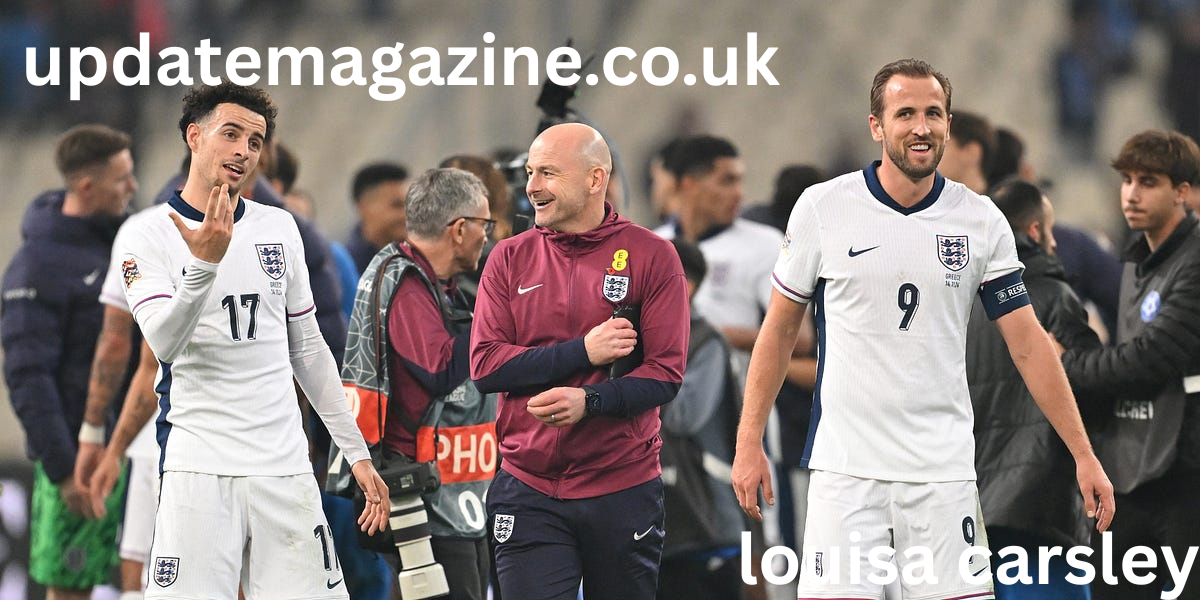
Louisa Carsley is best known publicly as the wife of English football coach Lee Louisa Carsley, who has recently risen to prominence as a manager in English football. While Louisa herself is not a public figure in her own right, her life and role within her family—as partner, mother, and the steady support behind a high‑profile football career—offer a rich story of dedication, resilience and quiet influence. This article explores Louisa Carsley life and the context around her experiences, drawing on what is publicly known about her family, the challenges they have faced together, and the often unseen role of a partner in the world of professional sport and family life.
Early Life and Background
Information about Louisa Carsley’s early life—her birth date, place of upbringing, education and career before meeting Lee Carsley—is not widely documented in public sources. Unlike her husband Lee, whose professional life is well covered due to his career in football as a player and coach, Louisa has maintained a private life largely away from media attention. As such, specific details of her youth and background remain out of the public domain. However, like many partners of public figures, her influence and support within her family and community form an essential part of her story even without extensive public documentation.
Given the typical life path of someone partnered with a professional sports figure from the United Kingdom, it’s reasonable to infer that Louisa’s life involved community, family, and education that provided a foundation for the resilience and strength she has shown in later years. She would later play a central role in the family life of a professional athlete and coach, helping to balance personal and professional demands.
Meeting Lee Louisa Carsley and Family Life
Louisa Carsley is married to Lee Carsley, a former professional footballer and coach who has played in the English Premier League and represented the Republic of Ireland internationally. Lee’s career on the field spanned clubs including Derby County, Blackburn Rovers, Coventry City, Everton and Birmingham City. After his playing career, he transitioned into coaching, eventually leading to roles within the England national team setup and, more recently, serving as interim head coach of the England senior men’s team.
The exact details of how and when Louisa and Lee met are not publicly documented. Like many couples where one partner is in the public eye, the personal details of their early relationship have been kept private. What is publicly known is that they married at some point before starting their family and have lived together in Kenilworth, Warwickshire, in England.
Kenilworth is a historic town in Warwickshire known for its medieval castle and community‑focused lifestyle. For Louisa, choosing to raise a family here provided a stable environment away from the constant media attention that follows professional football. It also likely gave their children a sense of normalcy and grounding.
Parenthood and Family Dynamics
Louisa and Lee Carsley have three children together: their eldest son Callum, their second son Connor and their daughter Lois. Each of their children has played a unique role in the family story.
Callum Louisa Carsley, the couple’s oldest child, followed aspects of his father’s footballing path and has been involved in football both as a player and in coaching or technical roles. According to public records, he played as a defender for Nuneaton Town and, as of 2024, served in a technical role at Birmingham City Football Club.
Connor, the second child, was born with Down’s syndrome—a genetic condition that can come with a variety of developmental and health-related challenges. The diagnosis profoundly affected the family, bringing with it both challenges and a renewed perspective on life. Lee louisa carsley has spoken publicly about how Connor’s birth changed his outlook on life, and by extension, this also reflects the family environment Louisa helped nurture.
The couple’s daughter louisa carsley completes the family. While less is publicly recorded about her personal interests and pursuits, she, like her siblings, has grown up in a family deeply connected to both sport and community.
Living with a child with special needs requires dedication, flexibility and emotional resilience. Louisa’s role in supporting not just Lee but all of their children—particularly Connor—highlights the emotional labor that often goes unseen in families where one or more members have special care requirements. The Louisa Carsley family’s engagement with advocacy and community support groups connected to Down’s syndrome demonstrates how personal challenges can turn into community strength.
Life at Home: Balancing Privacy and Public Roles
One of the most striking aspects of Louisa Carsley’s public story is her commitment to privacy. Unlike many partners of public figures who may choose to step into the media spotlight, Louisa has maintained a relatively private life. Public references to her focus primarily on her roles as wife and mother, and these are generally made in the context of Lee Louisa Carsley’s career and family experiences.
Despite the growing fame of her husband—particularly as he ascended within England’s football coaching ranks—Louisa Carsley has supported the family in what appears to be a stable and grounded household. Balancing the demands of family life with the pressures of professional sport involves considerable emotional work. Football careers, particularly at the professional and national levels, require extensive travel, long hours and public scrutiny. In such environments, family routines and stability become invaluable.
Louisa’s presence at home would have played a key role in maintaining this stability. Whether it was managing everyday tasks, supporting the children’s education and personal development, or navigating the health care and advocacy needs for Connor, her contribution is part of the underlying framework that allows a high‑profile career like Lee’s to thrive.
Challenges and Resilience
The Louisa Carsley family story is not without its challenges. Navigating life with a child who has special needs requires patience, perseverance and collaboration. Connor’s diagnosis with Down’s syndrome brought with it not only emotional adjustments but also practical ones—medical appointments, therapy schedules, and educational planning. It also gave the family an increased awareness of broader social realities beyond football and household privilege. Through these experiences, their worldview broadened, focusing more on community, empathy and real‑world challenges that extend beyond professional sport.
louisa carsley response to these family needs, while kept largely outside of the public media, would have required emotional intelligence and deep commitment. Supporting a family member with special needs often entails advocating for equal access to services, navigating health and education systems, and fostering an environment where every child receives encouragement and opportunities.
Furthermore, managing these demands alongside supporting a spouse in an elite sporting career is a significant role. When Lee’s career took him across clubs and eventually into coaching roles involving travel and media engagement, louisa carsley balancing of home life kept the family unit intact. Though her efforts may not be broadcast widely, they reflect the experiences of many partners of athletes and public figures whose contributions are foundational to their families’ success.

Community Engagement and Advocacy
While there is limited direct public detail about Louisa’s personal advocacy work, the family’s involvement with Down’s syndrome support groups and community organizations showcases a shared commitment to awareness and community contribution. Lee louisa carsley has been involved with such groups, and by extension, Louisa has played a part in this shared family engagement.
Stories from public accounts indicate that the Carsleys are patrons of the Solihull Down Syndrome Support Group, an organization focused on providing resources and a community for families and individuals affected by Down’s syndrome. Being a patron typically involves supporting awareness campaigns, fundraising efforts, and community events that foster inclusion and accessibility for individuals with special needs. Though not always highlighted in mainstream media, roles like these have meaningful impacts at the community level.
Such engagement suggests that Louisa’s life, while private, intersects with important societal conversations around disability support, health care advocacy and community solidarity. These contributions—whether through direct involvement or shared family activities—help broaden public understanding and create networks of support for families encountering similar experiences.
The Role of a Coach’s Partner in Professional Sport
In professional sport, particularly football, the partner of a player or coach often occupies a unique role. This role, while sometimes unnoticed, provides emotional and logistical support that allows the football professional to focus on performance and career demands. Partners juggle home responsibilities, children’s schooling, personal routines and often the emotional labor of managing a family’s well‑being.
In the case of Louisa Carsley, her position meant supporting a husband involved in high‑stakes football management. Lee Carsley’s transition from football player to coach—and eventually to roles within the England national team structure—would have involved long hours, travel and public responsibilities. Having a supportive partner at home becomes even more crucial in such scenarios.
For Louisa, being a coach’s partner likely meant offering stability during uncertain moments, providing support through career highs and lows, and fostering a nurturing home environment. Such roles are not trivial; they involve time management, emotional resilience, and the ability to prioritize family cohesion amidst external pressure.
Media Privacy and Personal Boundaries
One of the defining elements of Louisa’s public narrative is her privacy. Even as her husband’s career placed him in public view, she has maintained clear boundaries around personal information. This reflects a conscious choice to preserve family life outside the glare of media scrutiny.
Athletes and coaches often find their personal lives subjected to analysis and commentary in sports media. For partners, this can be intrusive and stressful. Louisa’s decision to keep her personal details undisclosed demonstrates a commitment to her family’s autonomy and a belief that not all aspects of life need public documentation to be meaningful. By maintaining privacy, she has helped create a safe space for her children and herself to grow without unnecessary exposure.
Legacy and Personal Influence
Although Louisa Carsley does not have a detailed public biography or extensive media profile, her life and choices have tangible effects on her family and community. Her influence is seen in the stability of her family, the care she has provided for her children, and the support she has given her husband throughout his career.
A legacy does not always need public recognition to be profound. The quieter, more personal impacts—such as nurturing emotional well‑being, advocating for family needs, and maintaining resilience through life’s challenges—are just as important. Louisa’s story underscores the often under‑acknowledged role of those who stand behind public figures and whose personal strength contributes to the success of others.

Conclusion
Louisa Carsley’s life may not be widely chronicled in biographies or media profiles, but her presence within her family and community forms a meaningful narrative of devotion, resilience and quiet support. As the wife of football coach Lee Carsley, mother of three children—including one with special needs—and a partner committed to family life beyond the spotlight, Louisa represents the many individuals whose contributions build the foundation for public achievements.
Her story—marked by personal strength, discretion and lived experience—reminds us that behind every public figure there are often private journeys filled with love, challenge and perseverance. Louisa’s life exemplifies how private influence and steadfast support shape the personal and professional trajectories of those around her. In celebrating her role, we honor the unseen efforts that uphold families, nurture growth, and enrich communities even without widespread public recognition.