

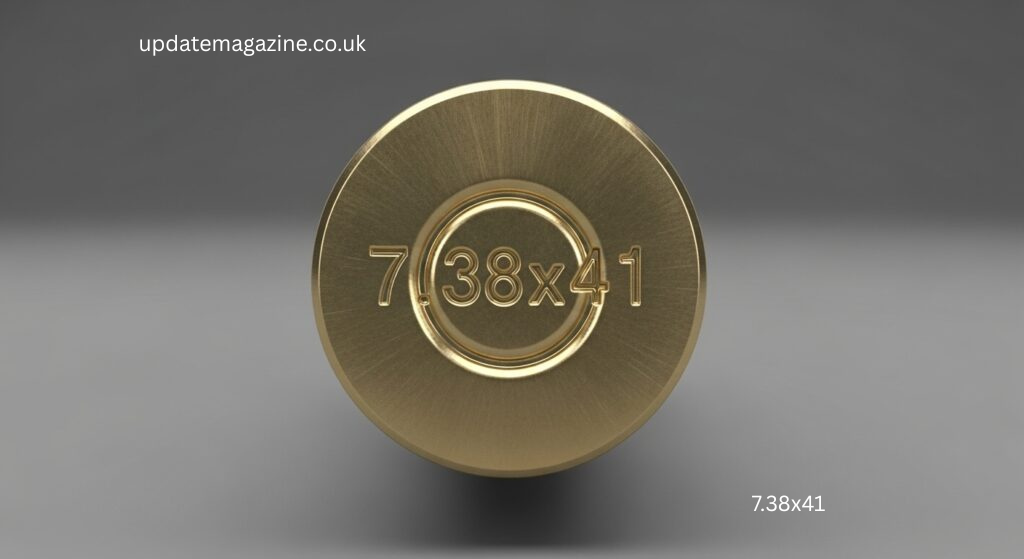
The term 7.38×41 has generated curiosity among firearm historians, ammunition collectors, and military technology researchers. Ammunition designations such as this typically refer to the diameter of the bullet and the length of the cartridge case, expressed in millimeters. However, unlike well-known cartridges such as 7.62×39 or 9×19, the designation 7.38×41 is far less commonly discussed, which makes it particularly interesting to researchers and enthusiasts who study the history of ammunition development.
Throughout the twentieth century, governments and weapons manufacturers experimented with many cartridge designs while searching for the best balance of power, recoil, range, and reliability. Some of these experimental rounds became globally adopted military standards, while others remained prototypes or niche designs known only to specialists.
Because of its unusual designation and limited documentation, 7.38×41 often appears in discussions about experimental ammunition and rare cartridge classifications. Many people encounter the term while researching historical military equipment, vintage firearms collections, or obscure ammunition records.
This article explores the concept of 7.38×41 in detail, including how cartridge naming conventions work, why experimental rounds are developed, the potential origins of the designation, and the broader role of unusual cartridges in the history of firearms technology.
Understanding Cartridge Naming and 7.38×41
To understand 7.38×41, it helps to first examine how ammunition cartridges are typically named. Most modern cartridges follow a naming system that includes two key measurements. The first number represents the approximate bullet diameter in millimeters, while the second number indicates the case length.
For example, a cartridge labeled 7.62×39 means the bullet diameter is approximately 7.62 millimeters and the case length is about 39 millimeters. This system helps manufacturers, engineers, and military organizations identify cartridges based on physical characteristics.
In the case of 7.38×41, the numbers suggest a bullet diameter of roughly 7.38 millimeters and a case length of 41 millimeters. However, unlike widely used cartridges, there is limited standardized documentation about this specific designation.
This ambiguity has led to several theories among ammunition researchers. Some believe 7.38×41 may refer to an experimental cartridge developed during military testing. Others suggest it might represent a prototype round that never entered mass production.
Understanding these possibilities requires exploring the broader history of cartridge experimentation.
Historical Context of 7.38×41
The potential origins of 7.38×41 likely lie within the broader period of ammunition experimentation that occurred throughout the twentieth century. During this time, many countries sought to modernize their military equipment and improve the performance of infantry weapons.
Designers experimented with numerous cartridge dimensions to find the ideal balance between power and controllability. Larger cartridges produced greater energy but generated heavier recoil, while smaller rounds allowed soldiers to carry more ammunition and fire more accurately.
During the early and mid-1900s, various military research programs evaluated dozens of cartridge configurations. Some were tested briefly and then abandoned, while others influenced later ammunition designs.
Because records from these experimental programs were not always publicly released, certain designations like 7.38×41 remain obscure. They may appear in engineering documents, collector catalogs, or limited archival materials.
Although the exact history of 7.38×41 may not be fully documented, it likely represents part of this era of innovation and experimentation in ammunition technology.
Technical Characteristics Associated With 7.38×41

Although detailed specifications are scarce, analyzing the numbers in 7.38×41 provides clues about its potential technical characteristics. A bullet diameter of approximately 7.38 millimeters would place it in the same general size range as many rifle cartridges used in military and sporting applications.
The case length of 41 millimeters suggests a medium-sized cartridge. This size falls between shorter intermediate rounds and longer full-power rifle cartridges.
Such dimensions could theoretically support a balance between moderate recoil and reasonable ballistic performance. Designers during the twentieth century often experimented with cartridges in this range to improve soldier mobility while maintaining effective range.
However, without confirmed documentation, it is difficult to determine the precise ballistic performance or intended purpose of 7.38×41. It may have been designed for experimental rifles, prototype military weapons, or specialized testing environments.
Regardless of its exact specifications, the designation highlights how engineers explored many variations in cartridge design during the search for optimal performance.
Why Experimental Cartridges Like 7.38×41 Are Created
The existence of designations such as 7.38×41 illustrates an important aspect of firearms development: experimentation. Engineers continuously test new designs to improve reliability, efficiency, and effectiveness.
Several factors often motivate the creation of experimental cartridges. One factor is the need to reduce recoil while maintaining adequate performance. Lower recoil allows soldiers or shooters to maintain better control and accuracy.
Another factor is weight reduction. Ammunition weight directly affects how much equipment soldiers can carry during extended operations. Smaller or more efficient cartridges allow greater mobility.
Engineers also experiment with case shapes, bullet profiles, and propellant types to improve consistency and performance.
In many cases, experimental cartridges remain prototypes because another design proves more practical or cost-effective. Nevertheless, these experiments contribute valuable knowledge that influences future ammunition development.
The designation 7.38×41 may represent one of these experimental steps in the ongoing evolution of cartridge technology.
The Role of Collectors in Preserving 7.38×41 Information
Ammunition collectors and historians play a significant role in preserving information about rare cartridges like 7.38×41. Many experimental rounds were produced in extremely small quantities, making them difficult to document through traditional historical records.
Collectors often maintain extensive catalogs that include photographs, measurements, and notes about unusual cartridges. These records help researchers identify obscure ammunition types and trace their origins.
Museums and private collections sometimes contain rare prototypes that were never widely distributed. When these artifacts are studied and documented, they provide valuable insights into the development of firearms technology.
Through careful preservation and research, collectors contribute to the historical understanding of cartridges like 7.38×41 that might otherwise be forgotten.
7.38×41 in Military and Engineering Discussions
Although the designation 7.38×41 is not commonly mentioned in mainstream discussions, it occasionally appears in specialized conversations among ammunition researchers and engineering enthusiasts.
In such contexts, the cartridge may be referenced as an example of experimental naming conventions or prototype development. Researchers sometimes analyze unusual designations to understand how engineers evaluated different dimensions and ballistic characteristics.
Military research programs historically explored numerous potential cartridge configurations before selecting standardized rounds for service. These programs often generated designations that never appeared outside testing environments.
Therefore, references to 7.38×41 may originate from archival documents, prototype listings, or engineering notes related to ammunition research.
Comparing 7.38×41 With Other Cartridge Types
Studying 7.38×41 also involves comparing it with more widely recognized cartridges. Many military and sporting rounds fall within a similar dimensional range.
For example, intermediate rifle cartridges developed during the mid-twentieth century often featured bullet diameters around seven to eight millimeters and case lengths between 35 and 45 millimeters.
These dimensions allowed designers to achieve a balance between range, recoil, and ammunition weight. Such cartridges were intended to provide effective performance in modern infantry rifles while remaining manageable for rapid firing.
Although 7.38×41 remains obscure, its dimensions suggest that it may have been part of this broader category of experimental intermediate cartridges.
Comparing these dimensions helps researchers understand where the cartridge might fit within the historical evolution of ammunition technology.
The Mystery Surrounding 7.38×41
One reason 7.38×41 continues to attract attention is the mystery surrounding its origin. Unlike well-documented cartridges, it lacks widely available historical records describing its development or intended application.
This mystery encourages ongoing research among historians and collectors. Every unusual designation has the potential to reveal new insights about the experimental processes that shaped modern firearms technology.
Some rare cartridges eventually become better understood when new documents are discovered or previously unknown prototypes appear in collections. Until such evidence emerges, designations like 7.38×41 remain intriguing pieces of the historical puzzle.
The curiosity generated by these mysterious cartridges highlights the depth and complexity of ammunition development throughout history.
The Importance of Studying Rare Cartridges Like 7.38×41

Studying 7.38×41 and other obscure cartridges is valuable for several reasons. First, it helps historians understand the technological challenges engineers faced when designing new ammunition.
Second, it reveals how experimentation and innovation contributed to the development of modern firearms systems. Many successful designs emerged only after extensive testing of alternative concepts.
Third, rare cartridges provide insights into the priorities of military research programs. Factors such as soldier mobility, logistics, and weapon performance often influenced cartridge design decisions.
By analyzing unusual designations like 7.38×41, researchers gain a deeper appreciation for the engineering processes that shaped modern military and sporting equipment.
Conclusion on 7.38×41
The designation 7.38×41 represents an intriguing example of the many experimental cartridges that have appeared throughout the history of firearms development. Although detailed information about this specific cartridge remains limited, its numerical structure suggests a bullet diameter of approximately 7.38 millimeters and a case length of about 41 millimeters.
Such dimensions place it within a range commonly explored during periods of military experimentation, when engineers tested numerous cartridge designs in search of improved performance.
While the exact origin and purpose of 7.38×41 may remain uncertain, the designation highlights the broader history of innovation that shaped modern ammunition technology. Experimental rounds, even those that never entered widespread production, contributed valuable knowledge that influenced later designs.
For historians, collectors, and engineering enthusiasts, studying rare cartridges like 7.38×41 provides an opportunity to explore the fascinating evolution of firearms technology and the creativity of the designers who sought to improve it.